Understand the differences among fixed automation, AI-assisted workflows and agents—and how to choose the safest practical architecture.
Start with the job, not the label
AI agents are most useful when a task genuinely requires flexible decisions instead of a fixed series of steps.
“We need an AI agent” is not a specification. A more useful question is whether the steps are known in advance or require interpretation and choice at runtime. An invoice reminder, for example, may only need a database query, a schedule and a templated message. An assistant investigating a complicated support request may need to read varied evidence, decide which tool to call next and ask for clarification.
The two tasks are not on equal footing merely because both involve software. Choosing an agent where a script will do often increases operational cost, uncertainty and testing effort without adding value.
Deterministic automation: predictable by design
In a deterministic workflow, the application defines the sequence of steps. Given the same validated inputs and system state, the control path is explicit. Think of “when a new form arrives, validate fields, create a ticket, assign a queue and notify a manager.” This can be tested through ordinary software techniques.
Traditional automation is an excellent choice for strict business rules, repeatable notifications, scheduled data moves and actions that need a clear audit trail. It can still use APIs and sophisticated code; the distinction is not whether the application is modern, but who controls the decisions.
AI-assisted workflows: flexibility within guardrails
Some steps benefit from language understanding without handing over the entire process. A workflow might extract action items from meeting notes using a model, then validate the result against a schema and present it to a human for approval. The sequence remains controlled by the application.
This hybrid approach is often the most useful starting point. The AI handles an ambiguous transformation, while ordinary software manages permissions, retries, timeouts, branching and side effects. It also provides clear places to capture errors and substitute a manual fallback.
Agents: choices that depend on context
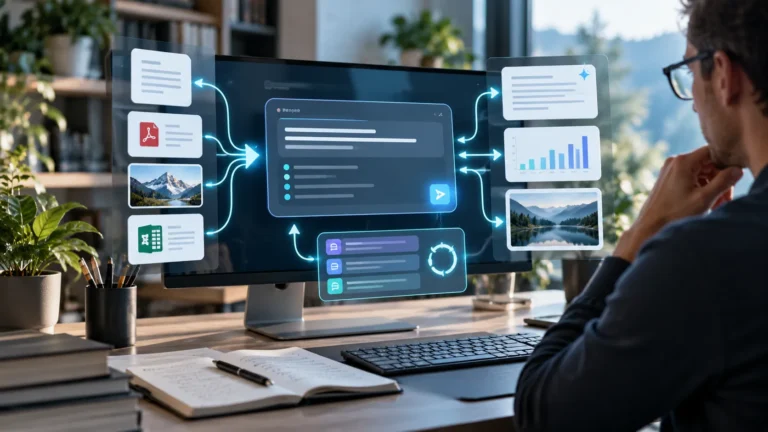
An agent is useful when it must decide which steps or tools to use based on evolving information. For example, a technical research assistant might choose whether to search documentation, inspect a log or ask a user for an additional detail. The system can adapt instead of following a single preset path.
That freedom brings new failure modes. A tool can return misleading text, a model can loop, costs can grow and an agent can attempt an unnecessary action. Engineers need bounded tool permissions, limits on iterations and spending, clear stopping conditions and approval gates for consequential writes.
A six-question architecture test
Before choosing a design, ask: Are the steps already known? Does the task require judgment over unstructured data? Can actions be reversed? Is the evidence available and current? What happens when the model is wrong? Can the result be objectively evaluated?
If the steps are known, start with deterministic automation. If one step requires interpreting text, place AI inside the controlled workflow. If the sequence genuinely needs to adapt as information arrives, consider an agent with carefully selected tools. Start with the least autonomous version that meets the need and expand only when testing justifies it.
A practical example: incoming customer requests
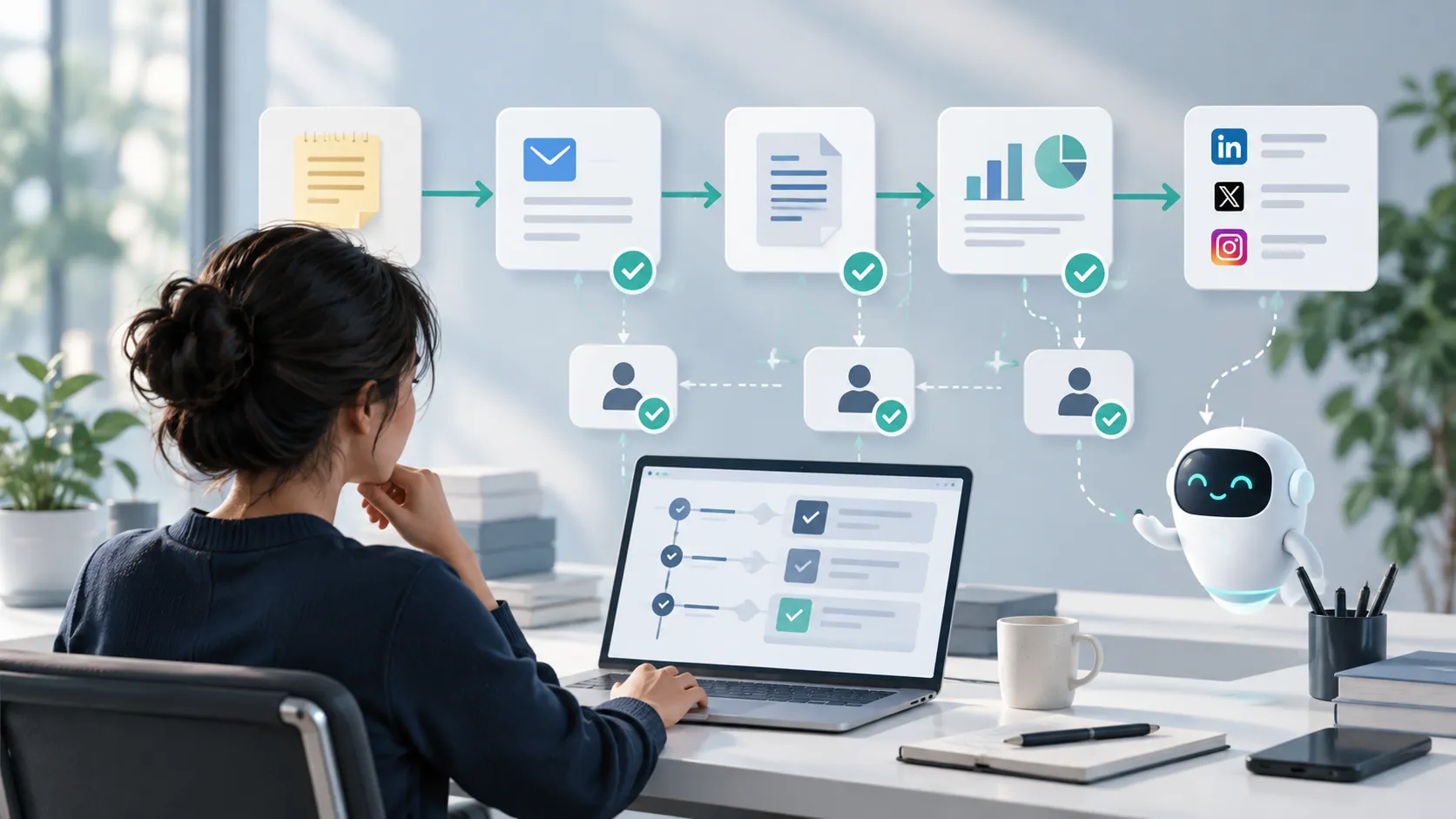
Version one could create a ticket whenever an email arrives. Version two might use AI to suggest the issue category and summarize the request, with a staff member reviewing suggestions. Version three might use an agent to investigate known documentation and draft a response. It should still require human approval before sending a consequential reply.
Each version adds capability but also adds risk, monitoring needs and integration complexity. Microsoft’s architecture guidance distinguishes deterministic workflows from agent-directed control and recommends designing for human checkpoints, state management and predictable orchestration where appropriate. The winning design is not always the one with the most autonomy.